

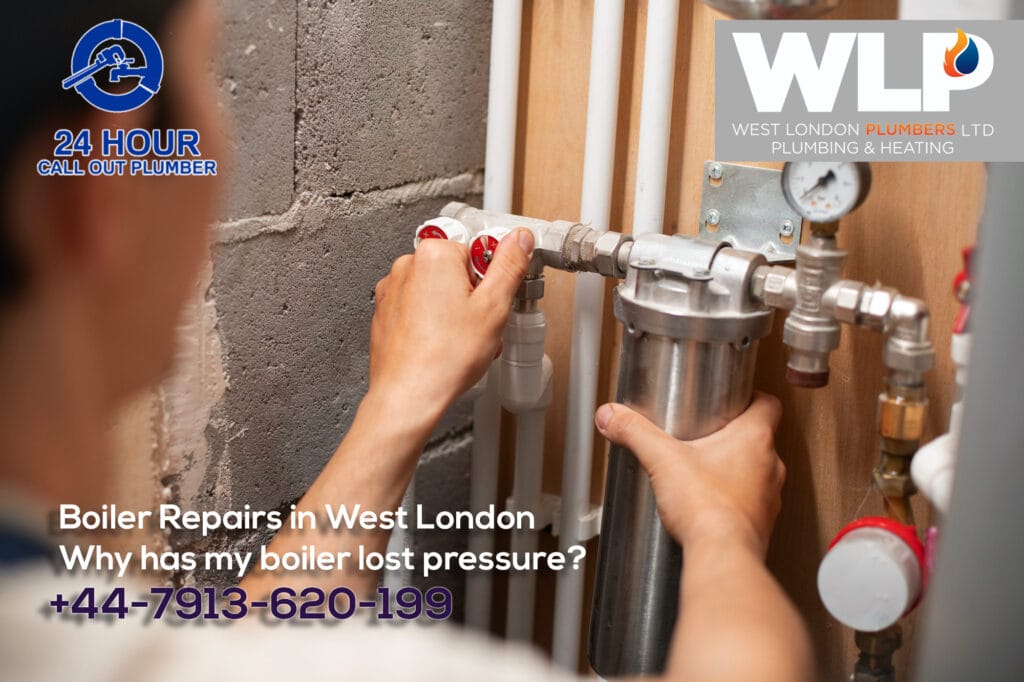
There is nothing quite like turning on the heating on a cold morning and discovering that your boiler is not working as it should. You check the thermostat, adjust the controls and then notice the pressure gauge sitting lower than normal. If your boiler has lost pressure, you are not alone. It is one of the most common boiler problems faced by homeowners across West London.
Low boiler pressure can affect your central heating and, in some cases, your hot water supply. The good news is that the cause is often straightforward to identify. However, if the pressure keeps dropping, it may be a sign of a problem that needs professional attention.
In this guide, we explain why boiler pressure drops, what you can safely check at home and when to call a professional plumber in West London.
What Is the Correct Boiler Pressure?
Most domestic combi and system boilers operate at around 1 to 1.5 bar when the system is cold. The exact recommended pressure depends on your boiler model, so always check the manufacturer’s instructions.
When your central heating is running, the pressure may rise as the water heats up. This is normal. However, if the pressure falls below the level recommended by the manufacturer, your boiler may display a fault code, stop heating or switch itself off. If your boiler pressure is too low, it is worth finding out why rather than repeatedly topping it up.
1. A Leak in Your Central Heating System
One of the most common reasons for low boiler pressure is a leak somewhere in the central heating system. Even a small leak can gradually reduce the amount of water in the system and cause the pressure gauge to fall.
Leaks may occur around:
- Radiator valves and pipe connections
- Visible central heating pipes
- Towel rails and radiator joints
- Boiler pipework or internal components
You might notice a damp patch, a small puddle, peeling paint or a stain on the ceiling. In some cases, a leak can be hidden beneath flooring or behind a wall, making it harder to spot.
If your boiler pressure keeps dropping, even after it has been topped up, there may be a leak that needs to be located and repaired. A professional central heating repair service in West London can inspect the system and identify the source of the pressure loss.
2. Recently Bled Radiators
Have you recently bled your radiators because they were cold at the top or making a gurgling noise? If so, this could explain why your boiler pressure has dropped.
Bleeding a radiator releases trapped air from the heating system. As air escapes, the pressure can fall. This is usually a normal consequence of radiator maintenance. Check the pressure gauge after bleeding your radiators. If it is below the recommended level, you may need to repressurise the system according to your boiler manufacturer’s instructions. If you are unsure how to do this, or the pressure drops again shortly afterwards, contact a qualified heating professional rather than repeatedly adjusting the boiler.
3. A Faulty Expansion Vessel
Your boiler’s expansion vessel helps manage the increase in water volume as the heating system warms up. If the vessel loses its air charge or develops a fault, the pressure may rise too much when the heating is on and then drop significantly as the system cools. You may notice the pressure gauge moving sharply between cold and hot conditions. In some cases, the boiler’s pressure relief valve may discharge water to protect the system. An expansion vessel problem is not usually something a homeowner should attempt to repair. It requires proper diagnosis and, where necessary, repair or replacement by a qualified heating engineer. If you suspect this is happening, arrange a boiler repair in West London before the issue leads to further disruption.
4. A Pressure Relief Valve That Is Leaking
The pressure relief valve is a safety component designed to release excess pressure from your boiler. If the system pressure becomes too high, the valve may discharge water through a discharge pipe. Sometimes, the valve may fail to close properly afterwards. This can allow water to escape slowly, causing the boiler pressure to fall. If you notice water coming from a discharge pipe outside your property, do not block it or attempt to seal it. The pipe is part of the boiler’s safety system. A qualified engineer can check whether the valve is operating correctly and determine whether another fault, such as an expansion vessel issue, has caused it to discharge.
5. A Fault Within the Boiler
If there are no obvious leaks around your radiators or pipework, the problem may be inside the boiler itself. Internal components, seals or connections can deteriorate over time. A boiler that repeatedly loses pressure may need a detailed inspection to identify the underlying fault. This is especially important if you notice unusual noises, visible water leakage, repeated fault codes or a loss of heating and hot water. For homes in Ealing, Ealing Common, Ealing Broadway and surrounding areas, a local emergency plumber in West London may be able to assess the problem and advise on the next steps.
Can I Repressurise My Boiler Myself?
Some boilers allow homeowners to repressurise the system using a filling loop or built-in filling control. If your manufacturer’s instructions permit it, you can follow the procedure carefully and bring the pressure back to the recommended cold level.
However, keep these points in mind:
- Do not exceed the pressure recommended in your boiler manual.
- Do not force a valve or control that you do not understand.
- Do not repeatedly repressurise a boiler that keeps losing pressure.
- Never remove the boiler casing or attempt internal repairs.
If you are unsure, it is safer to seek professional help. You can arrange a local plumber in Ealing to check the boiler and heating system.
When Should I Call a Plumber?
A one-off pressure drop after bleeding radiators may be relatively simple to resolve. But if the pressure keeps falling, the boiler frequently switches off, or you can see water leaking, the system should be checked. You should also seek professional help if the boiler pressure rises excessively when the heating is on, or if you notice water discharging from the pressure relief pipe. A qualified heating engineer can inspect the boiler, radiators, pipework and safety components to find the cause rather than simply treating the symptom.
Need Help With Low Boiler Pressure in West London?
A boiler that keeps losing pressure can be frustrating, especially when you need reliable heating and hot water. While some pressure changes are normal, repeated drops should never be ignored. Whether you are dealing with a leaking radiator, a faulty expansion vessel or a boiler that keeps switching off, professional diagnosis can help restore your heating system and prevent further problems. If your boiler has lost pressure in Ealing, Ealing Common, Ealing Broadway or elsewhere in West London, contact West London Plumbers for advice and assistance with boiler and central heating repairs.